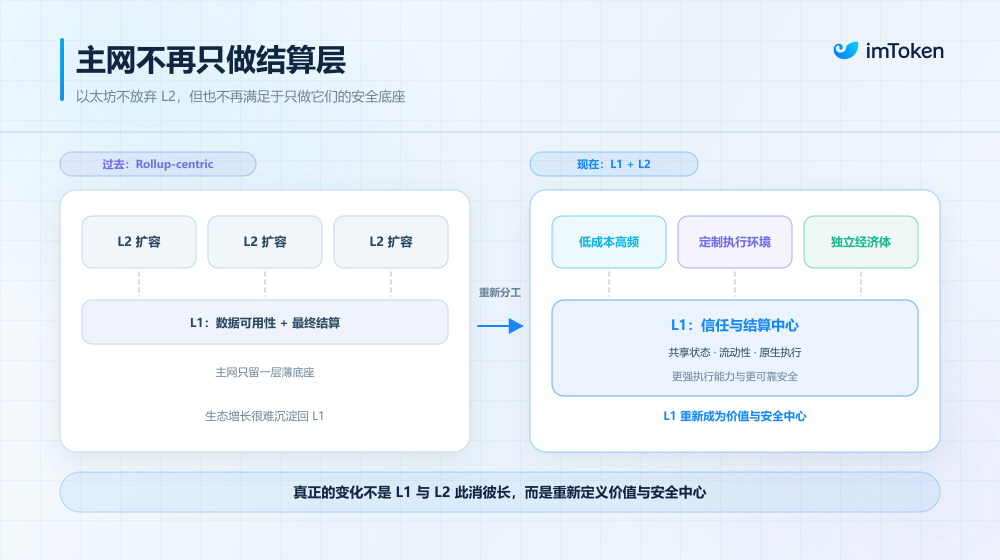
Originally reported by imToken in a PANews article published on November 11, 2026, at 21:36 (UTC+8). The article describes a shift in how some projects weigh Ethereum mainnet against running or using a separate layer 2 (L2). It does not suggest that L2s are disappearing: its central question is which activities benefit from remaining on L1 as mainnet costs fall, and which still need a different execution environment.
The cost of operating a separate network
ENS Labs planned a dedicated ZK rollup, Namechain, for ENSv2 in 2024. In February 2026, ENS co-founder Nick Johnson announced that development of Namechain would stop and ENSv2 would instead deploy on Ethereum mainnet. He cited L1 scaling that had progressed faster than expected. According to figures disclosed by ENS Labs, the average gas cost of an ENS name registration had fallen by about 99% over the preceding year, from nearly $5 to less than $0.05. A separate L2 would also require infrastructure, bridging, cross-chain resolution, audits and continuing operations.
Other projects made different, narrower changes. Synthetix published L2s are Dead, Long Live Ethereum in June 2025, citing fragmented liquidity and infrastructure problems; its new perpetuals exchange launched on L1 that December. In 2026, Trueo announced a move of its main deployment from Base to L1, ShapeShift moved its rFOX staking program from Arbitrum to L1, and Superseed stopped its L2 and planned to shift core products to mainnet. The article also reports that Nillion began moving node operations from its L2 to Ethereum mainnet as it launched Blacklight L1.
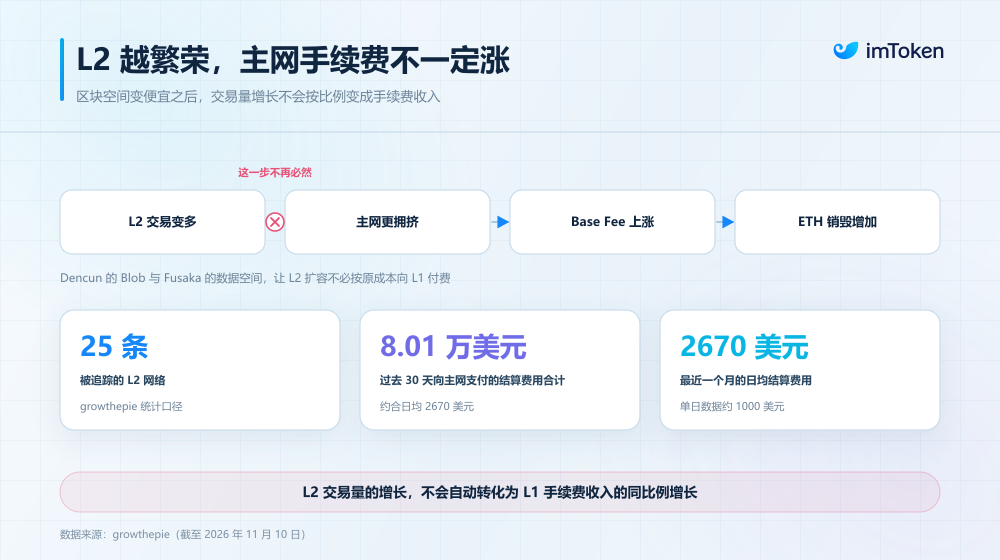
These examples are not evidence of a universal L2 exit. The article separately reports that Blast announced on October 2 that it would wind down because network costs exceeded L2 revenue. Abstract subsequently announced a planned network closure for December 15; that date was still in the future when the article was published.
Where execution and assets sit
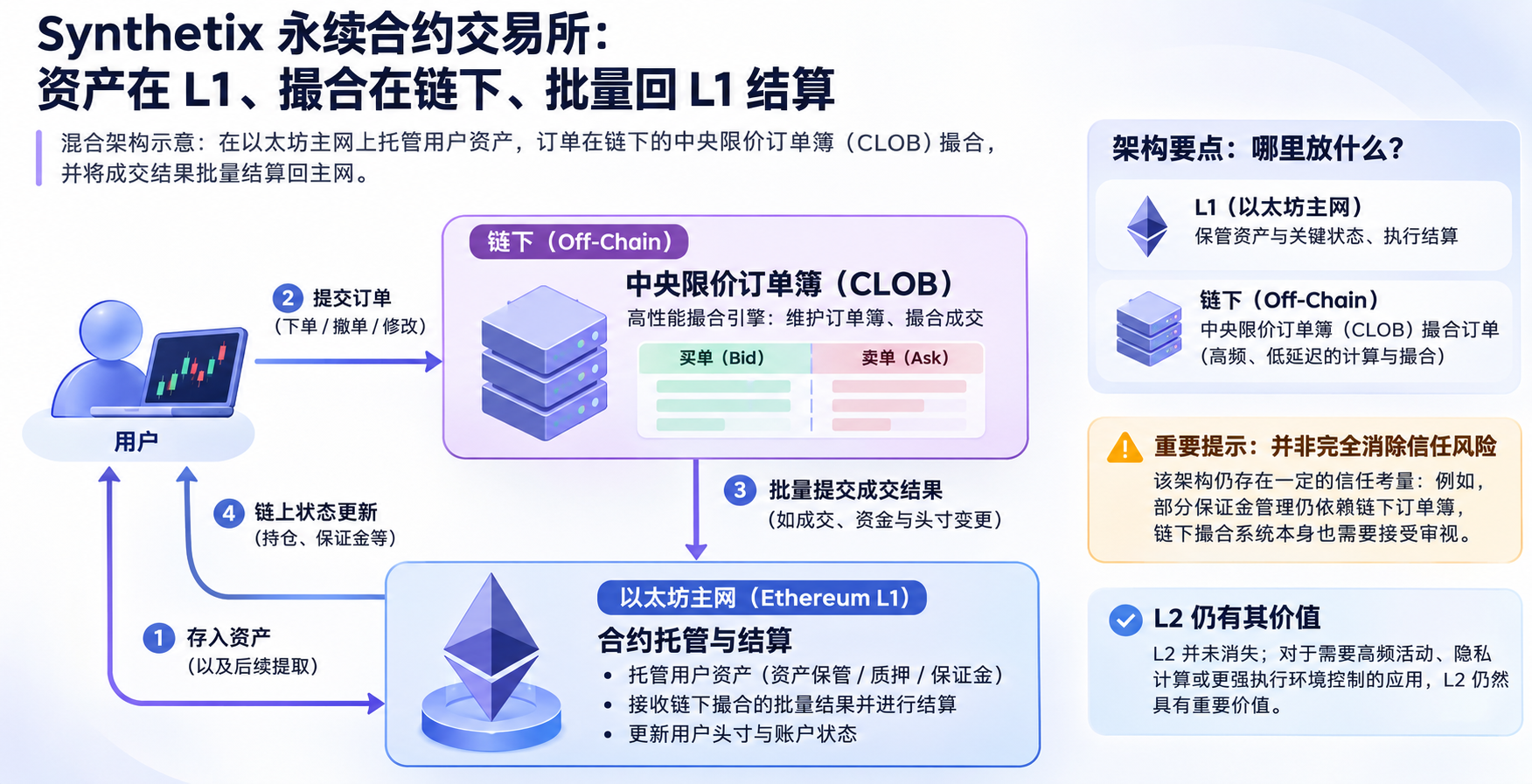
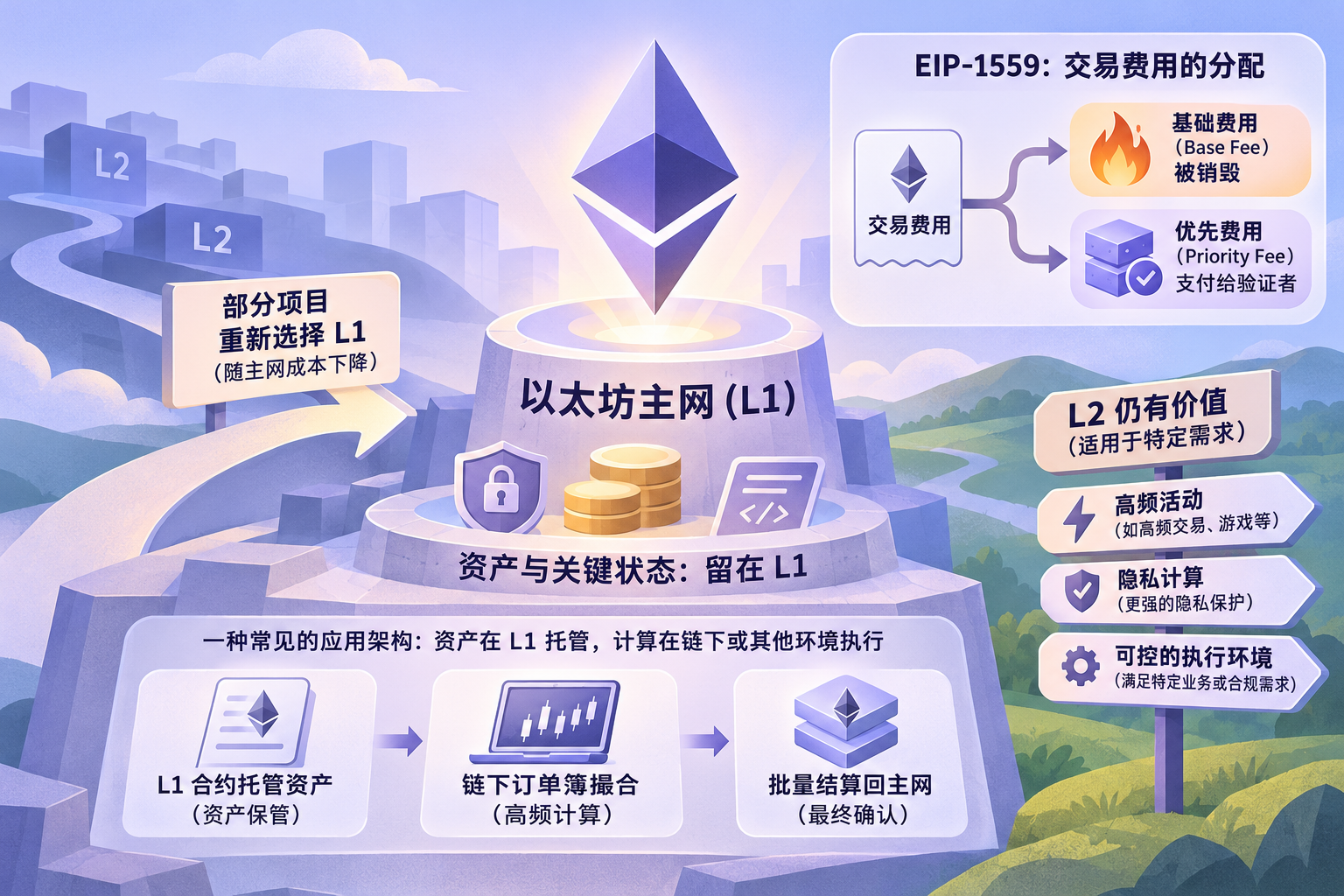
The article’s architectural distinction is between keeping assets and critical state on L1 and placing some high-frequency computation elsewhere. It describes Synthetix’s perpetuals exchange as using Ethereum contracts for asset custody, an off-chain central limit order book for matching, and batched settlement back on mainnet. That arrangement does not remove every trust consideration: the article notes that some margin management still depends on the off-chain order book.
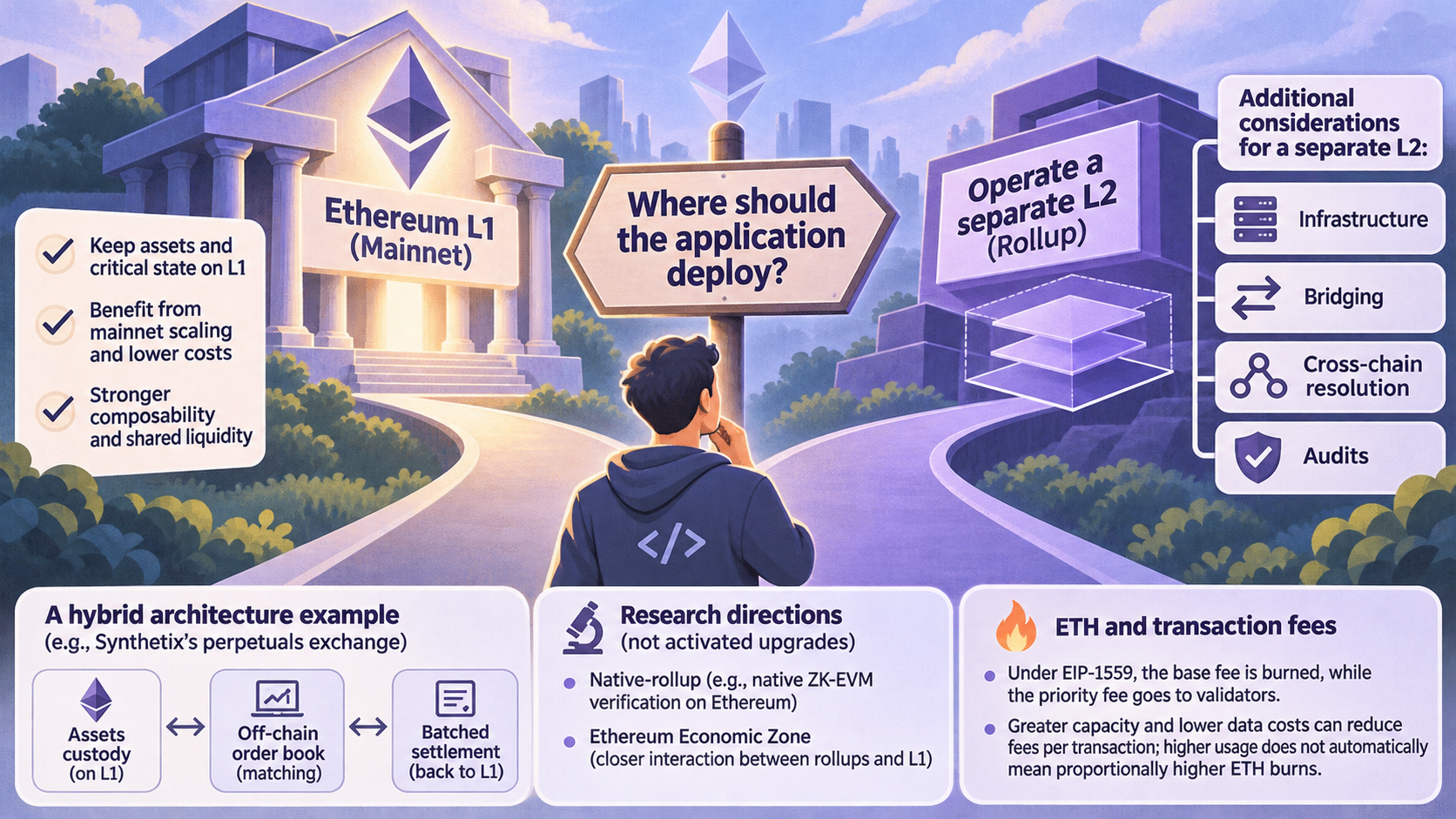
It also discusses native-rollup research, including the possibility of Ethereum directly verifying rollup EVM execution through a native ZK-EVM mechanism, and the Ethereum Economic Zone as an approach to closer interaction between rollups and L1. These are research and development directions, not activated Ethereum upgrades. L2s remain useful, the article argues, for applications that need high-frequency activity, privacy computation or control over their execution environment.
What cheaper transactions mean for ETH
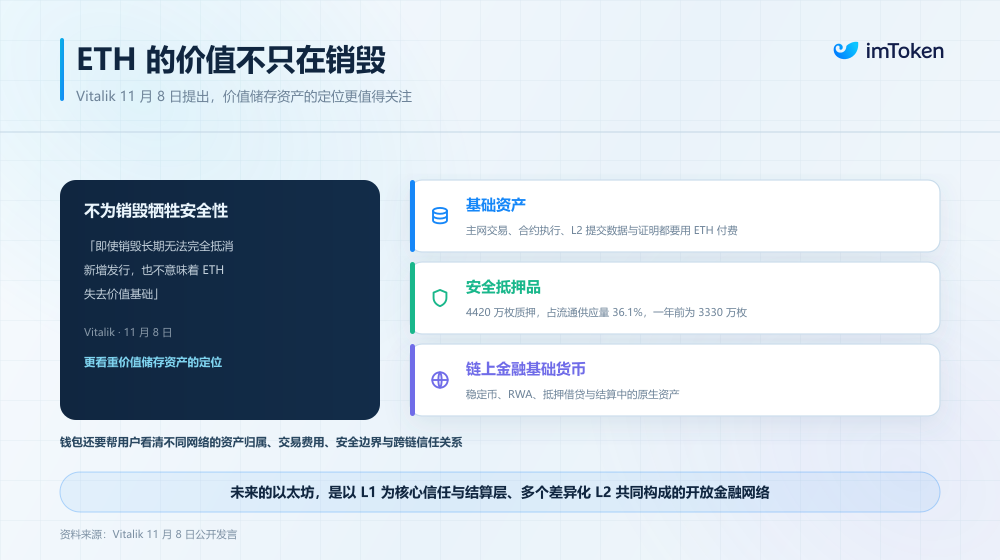
Under EIP-1559, the base fee is burned while the priority fee goes to validators. The article argues that lower costs for L2 data publication and greater L1 capacity could reduce fees per transaction without necessarily reducing overall activity. Higher usage therefore would not automatically produce proportionally higher ETH burns.
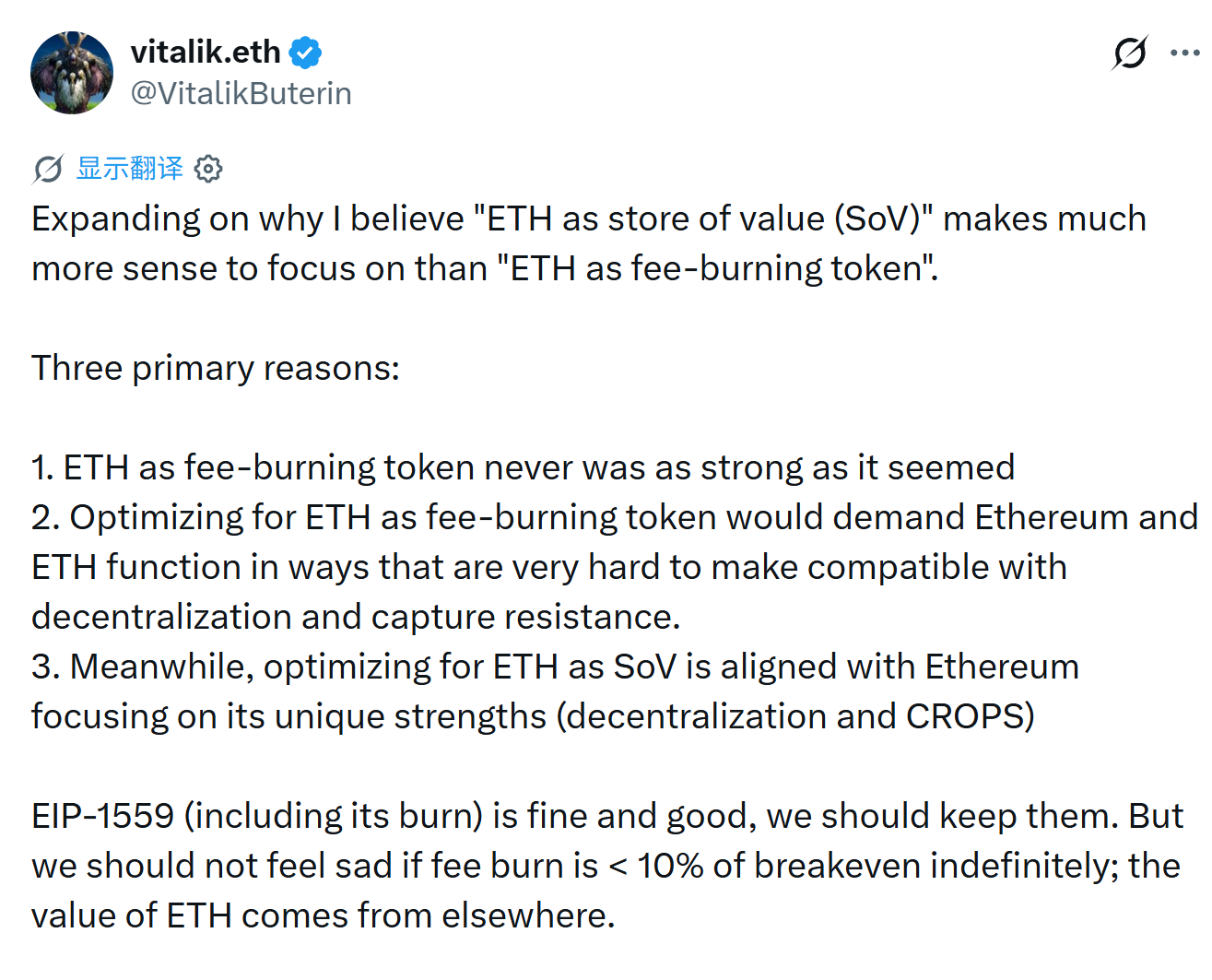
As presented in the article, Vitalik Buterin’s position is not to remove fee burning. Rather, he argues against making burn volume the sole measure of ETH’s value, emphasizing Ethereum’s decentralization, resistance to censorship and control, openness, privacy and security. That is an argument about the network’s long-term role—not a forecast that particular fee levels, issuance outcomes or asset values will follow.
Source: panewslab.com (originally published 2026-11-11 21:36 UTC+8)