Originally reported November 12, 2026, at 15:26 UTC+8.
Ethlabs has proposed moving Ethereum’s post-quantum target to 2027, ahead of the Ethereum Foundation’s previously established December 2029 target for full readiness. The proposal, called “pqai27,” is a proposed change in priorities—not an activated network upgrade.
In a post on the Ethereum Magicians forum, Ethlabs argued that AI development is making the timing of quantum and other cryptographic risks harder to predict. The group pointed to what it described as a U.S. government shift in its quantum-risk goal from 2035 to 2030 and Google’s aim to be post-quantum by 2029. Those comparisons form part of Ethlabs’ case for acting sooner.
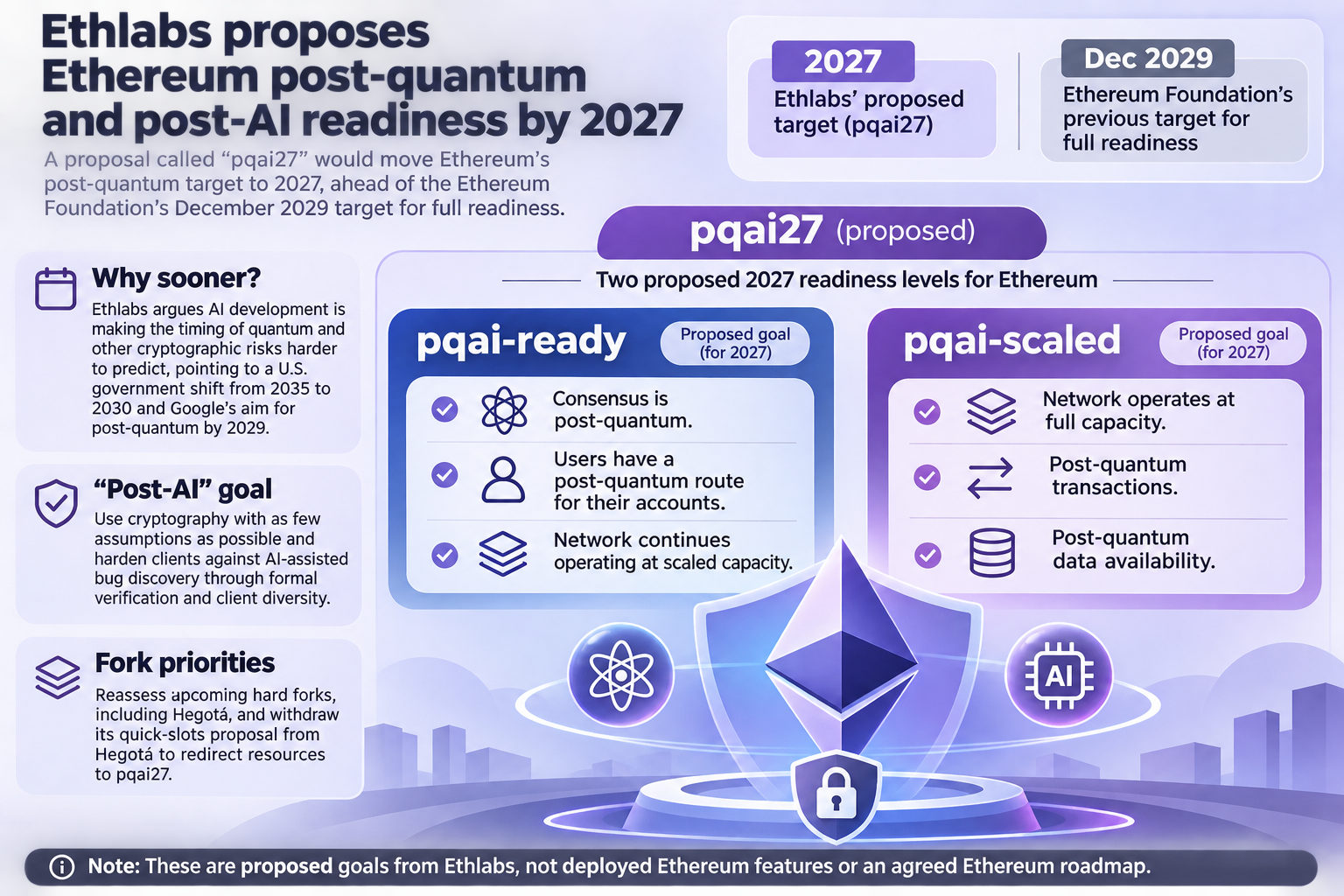
Ethlabs set out two distinct 2027 goals. Under “pqai-ready,” consensus would be post-quantum, users would have a post-quantum route for their accounts, and the network would continue operating at scaled capacity. “pqai-scaled” would go further: the network would operate at full capacity with post-quantum transactions and data availability.
The group also wants Ethereum to be “post-AI,” which it describes as relying on cryptography with as few assumptions as possible and hardening clients against AI-assisted bug discovery through formal verification and client diversity. To prioritize that work, Ethlabs called for reassessing upcoming hard forks, including Hegotá. It said it would withdraw its quick-slots proposal from Hegotá and redirect its resources to pqai27. Neither the proposed 2027 target nor those fork priorities should be read as an agreed Ethereum roadmap.
Source: theblock.co (originally published 2026-11-12 15:26 UTC+8)