In a report published on November 17, 2026, Backpack said it had received approval from the U.S. Commodity Futures Trading Commission (CFTC) for both a designated contract market (DCM) and a derivatives clearing organization (DCO). Speaking at Breakpoint 2026, founder Armani described plans for a U.S.-based derivatives venue and a broader stock-trading network built around Solana. The approvals were reported as obtained; the products and expansion he outlined were plans, not completed launches.
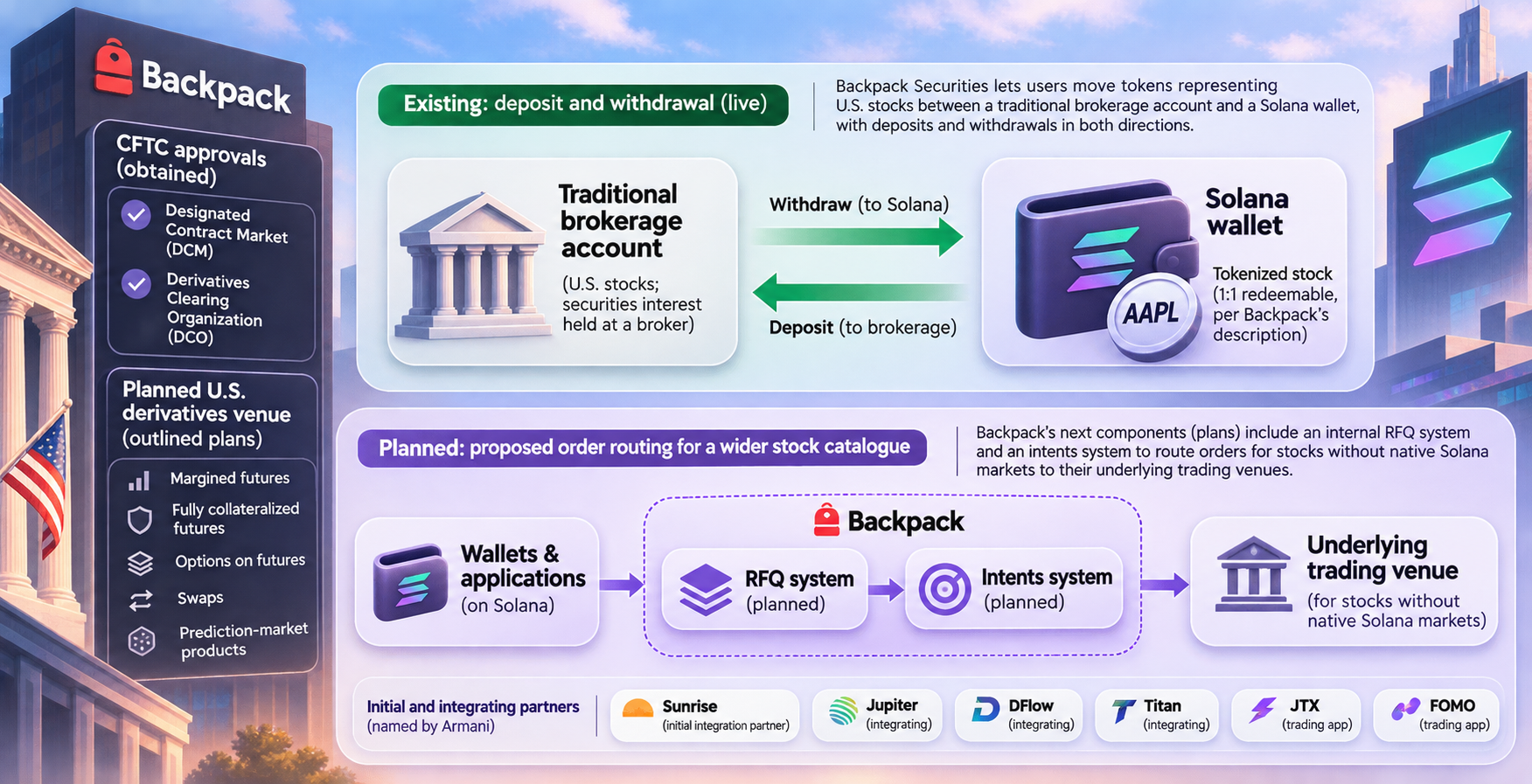
Armani said the clearing authorization would enable Backpack to pursue U.S. offerings including margined futures, fully collateralized futures, options on futures, swaps and prediction-market products. He said the company aimed to bring more of the Solana ecosystem into the United States over the following year, while acknowledging that substantial work remained.
Stocks between brokerage accounts and Solana
Armani said Backpack Securities already lets users move tokens representing U.S. stocks between a traditional brokerage account and a Solana wallet, with deposits and withdrawals available in both directions. He described the tokens as redeemable one-for-one and said users retain securities interests held at a traditional broker. Those are Backpack’s descriptions of its product, not an independent assessment of its legal or redemption arrangements.
He said 94 stocks were then available on Solana and set a goal of expanding that number to 10,000. Citing Blockworks data shown in his presentation, Armani claimed Backpack Securities offered execution 40 times better than stocks on Robinhood Chain. He also said a snapshot showed Solana trading volume for PTN 486% above traditional venues. The presentation did not establish that either comparison applied across all stocks or trading conditions.
Proposed routing for a wider stock catalogue
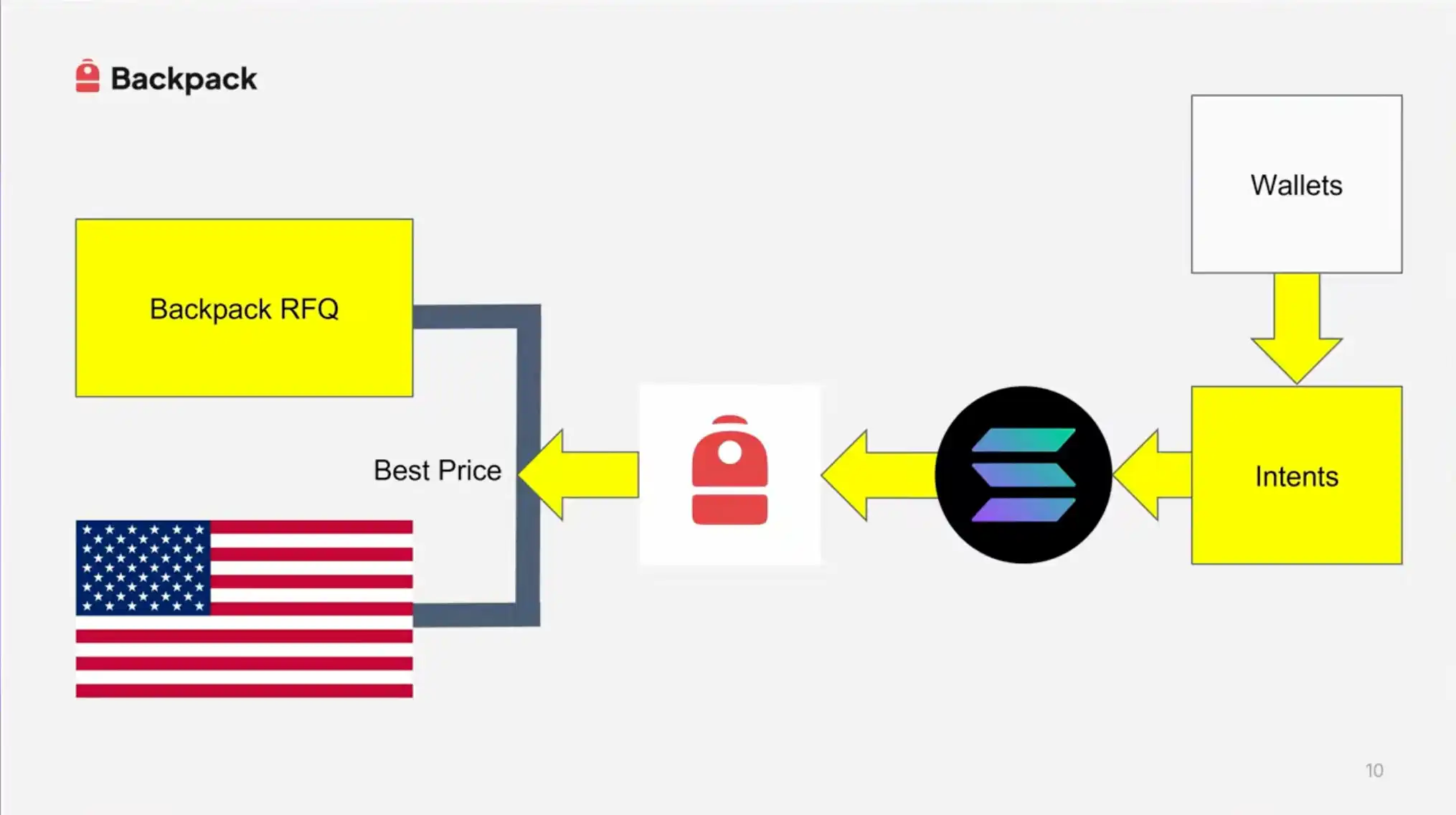
Backpack’s next components, according to Armani, were an internal request-for-quote system (RFQ) and an intents system to route orders for stocks without native Solana markets to their underlying trading venues. He said one market maker was participating in early RFQ tests and that 25% of orders there received a better execution than through the traditional broker route.
Armani named Sunrise as an initial integration partner and said Jupiter, DFlow and Titan were integrating, alongside trading applications JTX and FOMO. His proposed end state was an open network connecting wallets and applications to stock liquidity through Solana. The speech concerned Solana-based trading infrastructure; it did not describe an Ethereum protocol change or upgrade.