
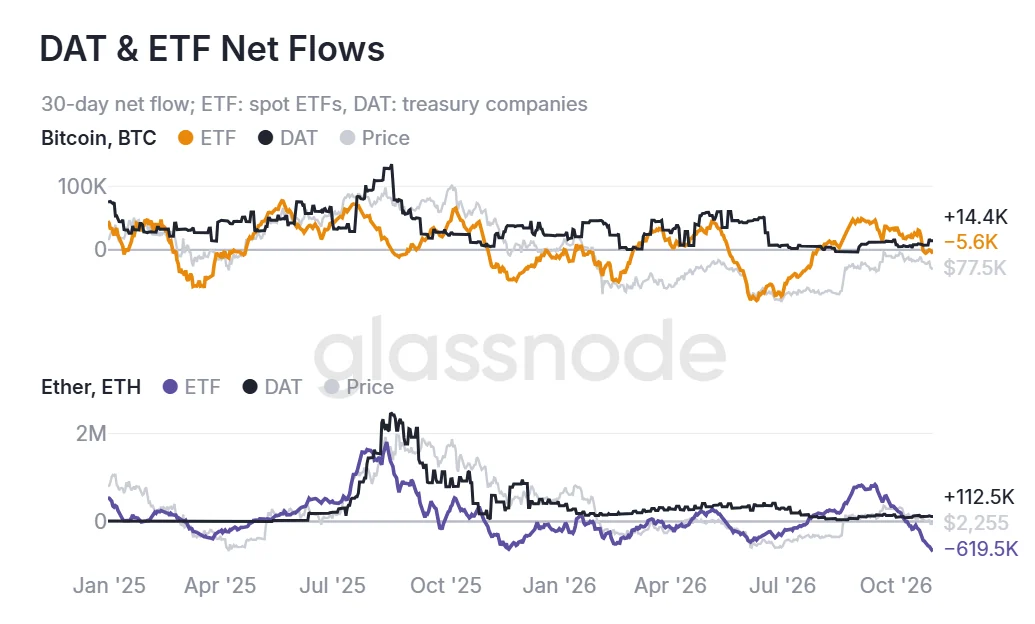
US spot Ethereum ETFs recorded net outflows of 643,000 ETH in October 2026, the largest in Glassnode Insights’ series, which began in August 2024. Corporate treasury companies continued to buy ether, but their purchases amounted to less than one-fifth of the ETFs’ net sales.
Glassnode’s November 26 Strategy Watch report traced the split to early October. In September, both ETFs and treasury companies had been net buyers of ether and bitcoin. On a rolling 30-day basis, US spot Ethereum ETF flows turned negative on October 9. Bitcoin ETF flows followed about two weeks later, ending the month with a net outflow of 5,600 BTC. Treasury companies remained net buyers of both assets.
ETF outflows and broader capital flows
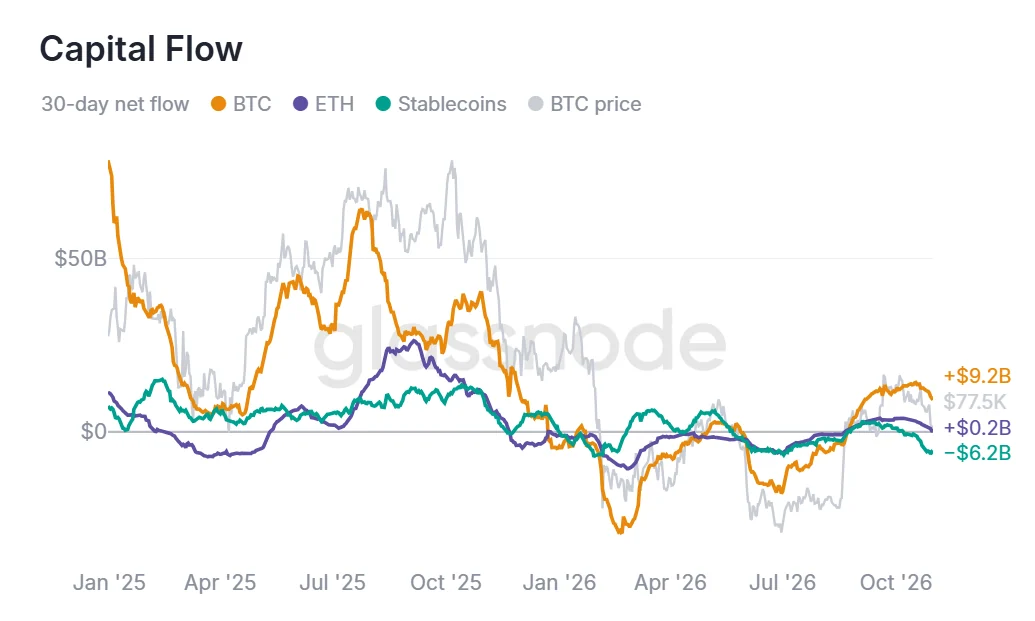
The ETF figures did not tell the whole story for bitcoin. Glassnode’s broader measure of 30-day bitcoin net inflows peaked at $14.2 billion on October 17, its highest reading since November 2025. It fell to $9.2 billion by month-end but remained positive despite a 7% decline in bitcoin’s price. Inflows to ether, by contrast, slowed to nearly zero.
Rolling 30-day stablecoin flows turned negative on October 7. By late October, net outflows exceeded $6 billion, the largest since early July. Glassnode interpreted redemptions for dollars as evidence that some capital was leaving crypto rather than waiting in stablecoins. It said the outflows intensified in November.
What the fall in Ethereum DeFi deposits measures
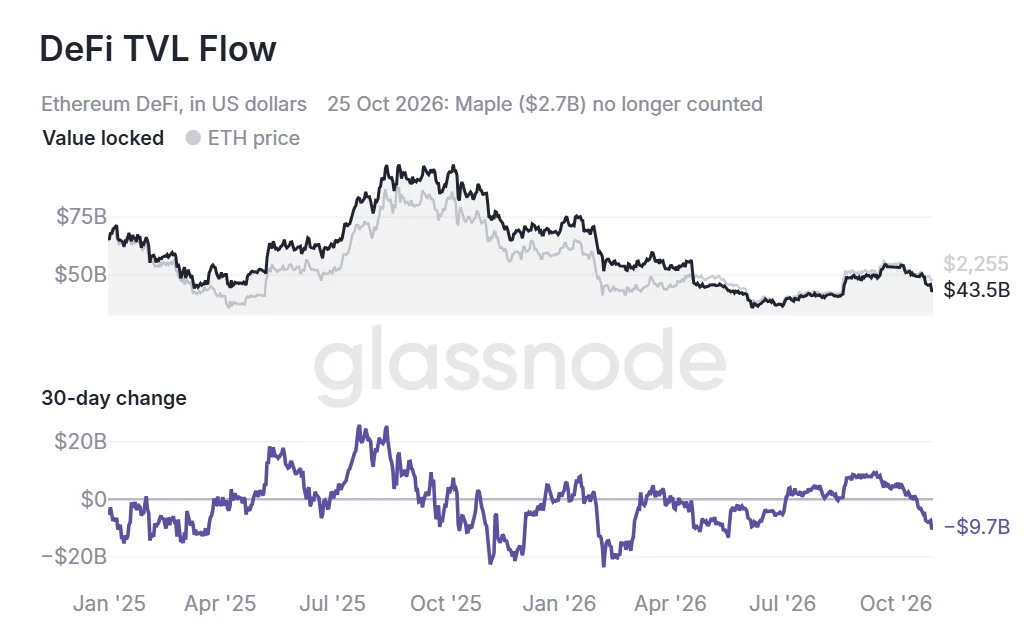
The dollar value of assets deposited in Ethereum decentralized finance protocols fell about 13% in October to $43.5 billion, erasing more than half the gains since August. Ether’s spot price fell 16%. Stablecoin deposits that held their dollar value helped explain why total value locked, or TVL, declined less than ether itself.
A change in coverage also matters when reading the chart: on October 25, the data provider stopped counting roughly $2.7 billion associated with the Maple lending protocol in its Ethereum figures. That change made the charted decline look steeper; it was not itself a withdrawal by depositors.
Glassnode identified the day of the reported Binance theft as the month’s largest one-day TVL decline. Ethereum TVL fell 7% that day while ether fell 5%, a gap the researchers interpreted as evidence that some depositors withdrew funds. The report put the value of assets stolen from Binance at approximately $6.3 billion.
Vault returns, fund performance and cash holdings
Ether vault returns lagged native Ethereum staking. Dollar-denominated vaults, meanwhile, returned 0.41%, ahead of US Treasuries at 0.34%, their fourth consecutive month of outperformance. Deposits across the vaults Glassnode tracked fell about 2% to $9.5 billion, with most redemptions occurring after the reported theft.
Directional funds lost 7.04%, with event-driven strategies down 16.25%. Market-neutral strategies were nearly flat at −0.08%; Glassnode said the Binance incident had little effect on their returns. Managers’ average cash allocation rose from 12.2% to 15.7%, above its long-term average. Ethereum’s share of manager attention fell from 42% to 25%, while bitcoin’s rose from 8% to 22%. Those figures track attention, not portfolio weights.
Futures premiums diverged
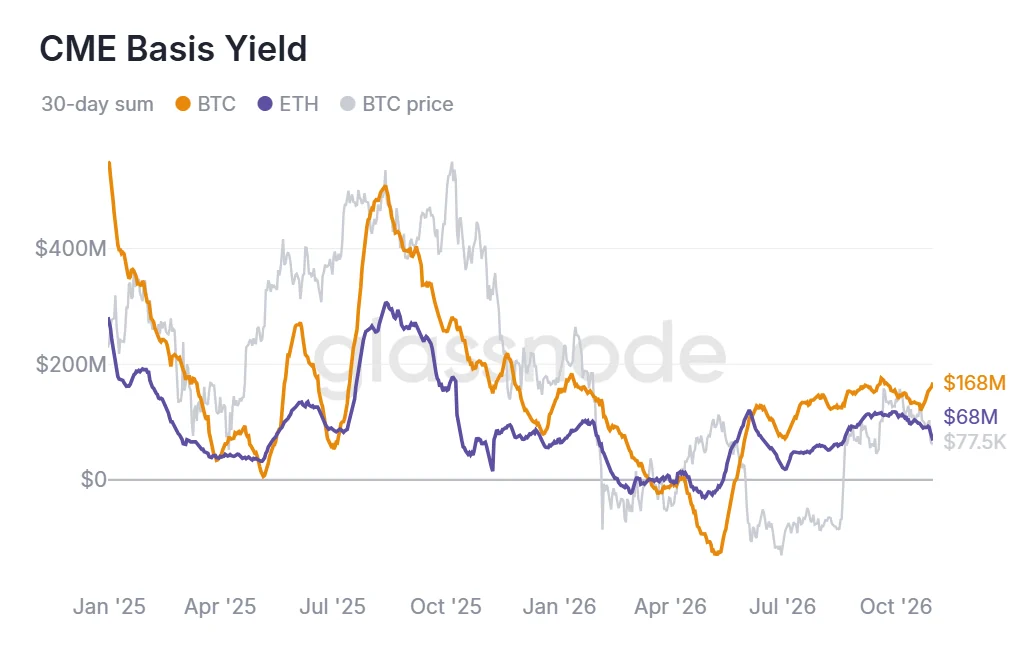
Glassnode also tracked 30-day dollar earnings from the CME basis trade, which pairs a spot purchase with a short futures position to capture the futures premium. Bitcoin basis earnings fell to $120 million on October 21, their lowest since July, before recovering to $168 million at month-end. Even after the recovery, the reading was only one-third of its August 2025 peak.
Ether basis earnings fell by about two-fifths to $68 million, their lowest since August. Separately, ether funding rates turned negative in the final three days of October, meaning short positions paid long positions.