In reporting published on November 18, 2026, TD Cowen maintained its Buy rating on Ethereum treasury company Sharplink (SBET) and kept its $13 price target, while adopting a more conservative outlook for ether.
Senior analyst Lance Vitanza cited a sharp decline in ETH burned per transaction despite continued growth in network activity. TD Cowen now assumes ether will end the fourth quarter of 2026 at approximately $2,413—10% below its third-quarter level—with a flatter path of appreciation thereafter. Vitanza said the firm remains constructive on Ethereum adoption but is placing more weight on the decline in burn per transaction.
Staking and treasury returns
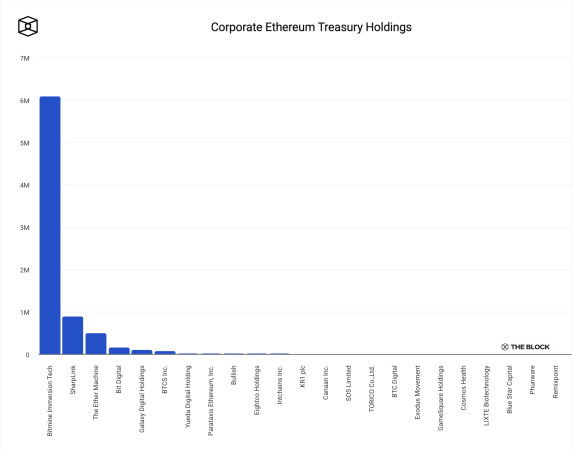
Vitanza viewed Sharplink’s more active treasury management as a potential source of additional ETH-denominated returns, though TD Cowen has largely left that potential upside out of its model. Sharplink’s holdings rose from 892,708 ETH at the end of the third quarter to 896,003 ETH as of November 16. The recent increase came primarily from staking rewards and related yield rather than new purchases; cumulative staking rewards reached 31,820 ETH.
Sharplink has also allocated $200 million to liquid staking through Lido and deployed capital into the Galaxy Sharplink Onchain Yield Fund. Vitanza said that, in a favorable ether price environment, he expects Sharplink to substantially outperform spot ether exchange-traded products by increasing its ETH holdings per fully diluted share. If ether’s price remains depressed, he said staking yield should more than cover the company’s operating costs. Those are the analyst’s expectations, not reported outcomes.
Sharplink reported third-quarter net income of $751.4 million, or $3.45 per diluted share, compared with $104.3 million a year earlier. The result was driven largely by $676.7 million in unrealized gains on its ether holdings. Revenue rose 24% year over year to $13.5 million, including $13.1 million in staking income. CEO Joseph Chalom said the company was focused on maximizing the productivity of its ETH holdings while maintaining disciplined capital allocation.